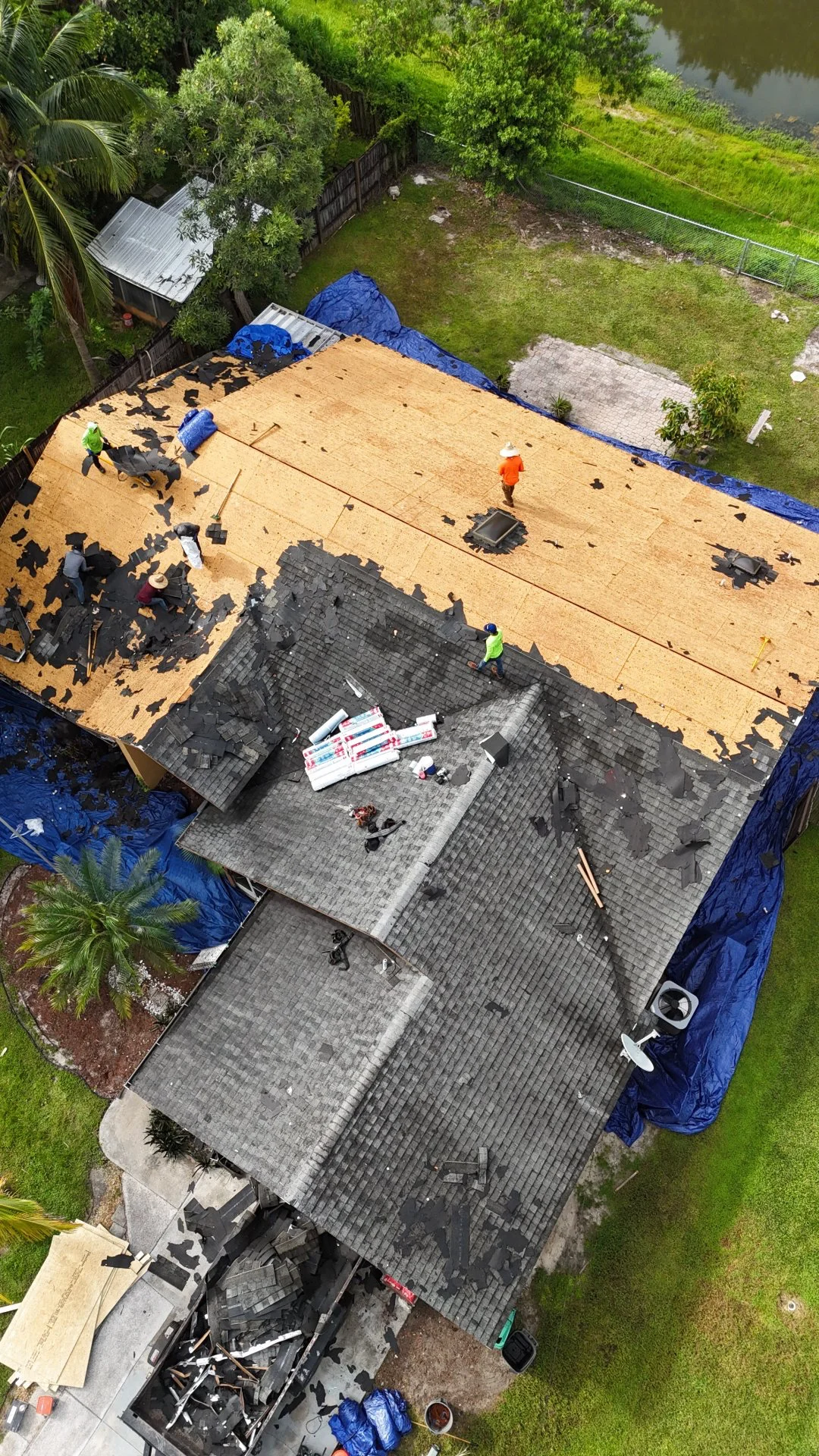
A Florida roof is not merely a cover; it is the primary structural defense against one of the most hostile environments in North America. The relentless combination of intense, rapidly intensifying hurricanes, extreme ultraviolet radiation, and a volatile insurance market has transformed roof construction from a trade into a science of fortification.
For property owners and managers, understanding this new reality is the first step toward protecting their investment. True resilience and long-term value in a Florida roof begin long before the first shingle is laid, it starts with an expert understanding of the forces at play.
As specialists in the concrete and structural work that forms the backbone of Florida’s most durable buildings, Venice Commercial Service brings a unique perspective to roofing integrity that traditional roofers often miss. Our expertise begins from the ground up, recognizing that the integrity of a roof is inseparable from the foundation and walls it rests on.
This article reveals seven critical aspects of modern roof construction that can save you from catastrophic failure and unnecessary expense, offering a clear path through the complexities of building in this demanding climate.
1. The Real Threat Isn’t Wind Pushing; It’s Pulling Your Roof Off
The most common misconception about hurricane damage is that wind “pushes” a roof until it collapses. While direct pressure is a factor, the primary force responsible for catastrophic roof failure is aerodynamic “uplift”—a powerful suction that attempts to tear the roof from the building.
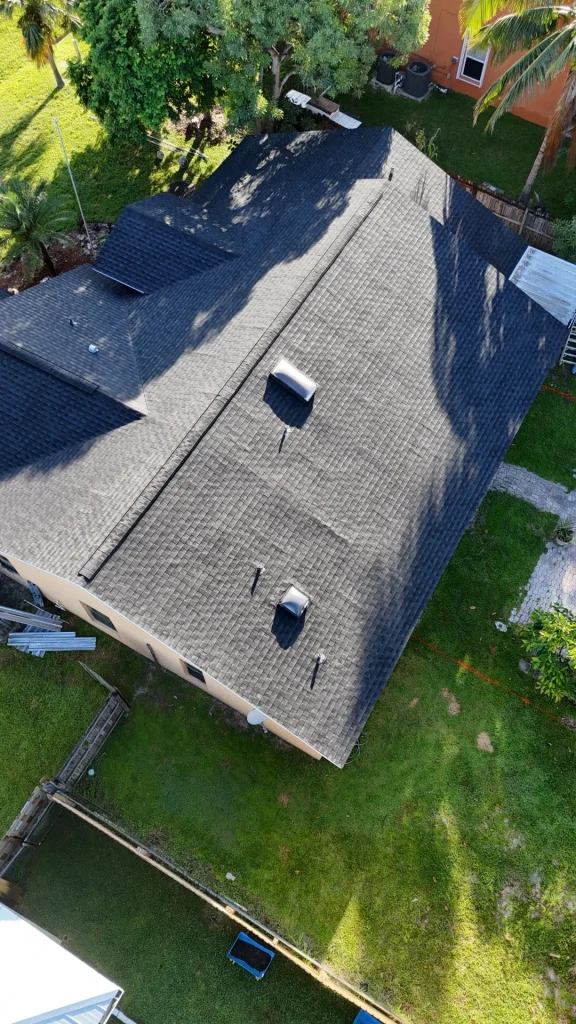
Forensic analysis following Hurricane Ian provided undeniable proof that a roof’s geometry is its first line of defense against this force. Hip roofs, with their pyramidal shape, demonstrated vastly superior performance to traditional gable roofs. A hip roof’s design allows wind to flow smoothly over and around the structure, reducing turbulence and distributing the wind load more evenly.
2. A Resilient Roof Starts in the Ground, Not on the Rafters
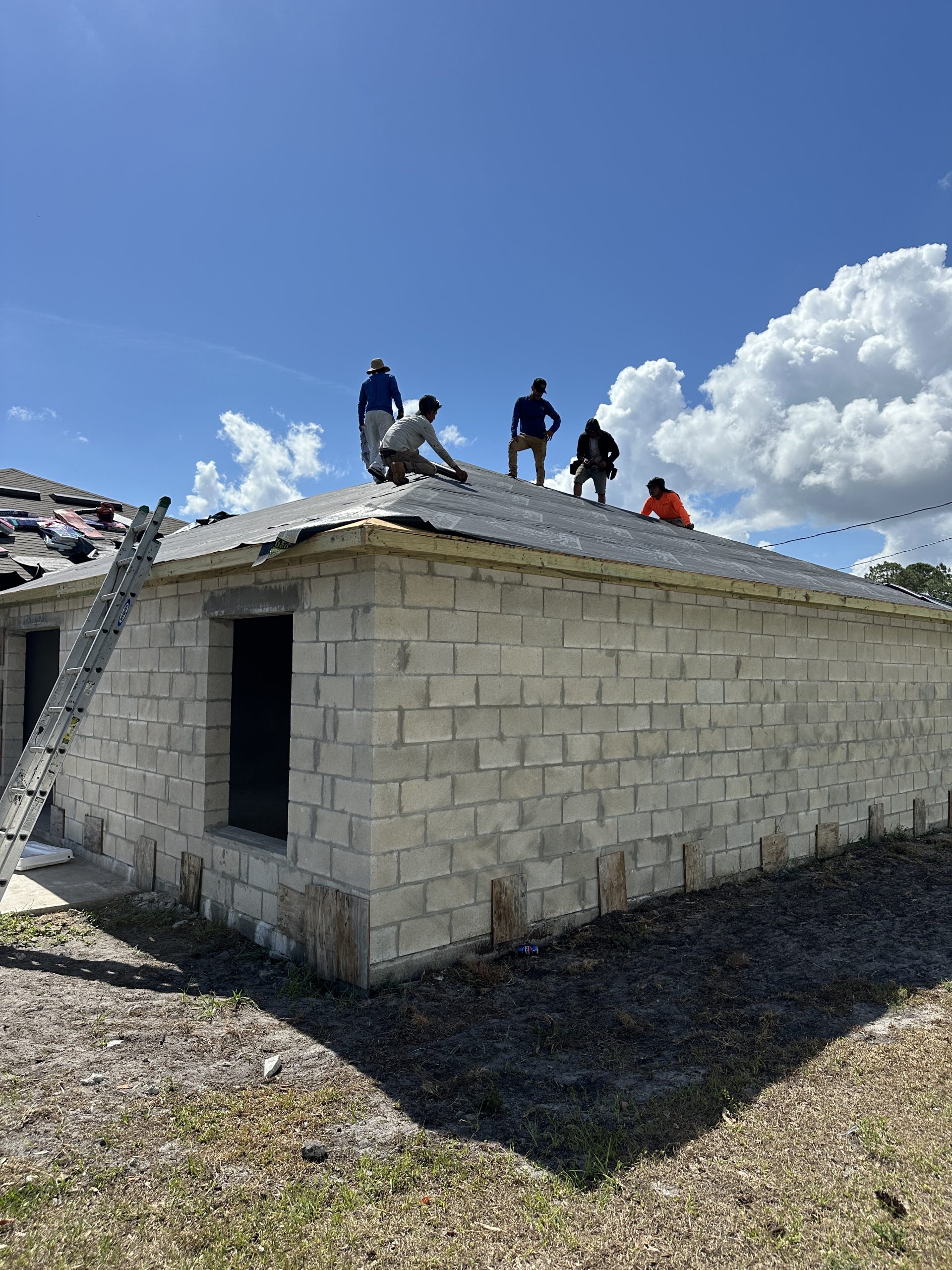
While the final layer of shingles or metal gets all the attention, the true strength of a roof system begins in the ground with the building’s foundation and structural work. This is the core expertise of Venice Commercial Service and the most overlooked secret to roof longevity. Florida’s predominantly sandy or karstic (porous limestone) soil can lead to differential foundation settlement, where parts of the foundation sink at different rates.
To combat this, Florida construction relies on a critical component: the concrete tie beam. This reinforced concrete beam, poured along the top of the masonry walls, serves two vital functions. First, it acts as a rigid diaphragm, unifying the walls so they act as a single, monolithic unit. Second, and most importantly, it provides the solid anchor point for the hurricane straps that connect the roof trusses to the structure
3. The Sun is a Chronic Destroyer, Not Just a Gentle Warmer
While hurricanes are the acute threat to a Florida roof, the sun is a chronic destroyer, relentlessly degrading materials day after day. The state’s subtropical location means that UV radiation strikes roofing materials at a nearly perpendicular angle, initiating a chemical breakdown process known as photo-oxidation.
This chemical degradation is dramatically accelerated by “thermal shock.” On a typical summer afternoon, a roof surface can reach temperatures of 167°F (75°C). When a sudden thunderstorm rolls in, the surface temperature can plummet to 77°F (25°C) in minutes. This rapid contraction causes the already brittle shingles to develop micro-cracks, leading to granule loss and eventual failure.
4. Coastal Living’s Hidden Roof Killer: Why Your Metal Roof Choice Matters
For properties located on or near the coast—a key concern for clients in the Venice, FL area—the salty air is an invisible but relentless corrosive agent. Salt spray from the ocean acts as a powerful electrolyte, dramatically accelerating the chemical reactions that cause metals to corrode. This makes the choice of metal roofing material a critical decision.
The two most common options, Galvalume and Aluminum, perform very differently in this environment.
| Feature | Galvalume (Coated Steel) | Aluminum |
| Resistance to Salt | Low to Medium | Extreme |
| How it Fails | The sacrificial zinc layer is rapidly consumed by chlorides, leading to catastrophic corrosion of the steel core. | Forms a stable, inert layer of aluminum oxide that seals and protects the metal. Does not rust. |
| Recommended Use Zone | Inland areas only (>1,500 meters from the coast). | Immediate coastal fringe and all other areas. |
5. Your Roof’s Most Valuable Layer is an Invisible, Sticky Shield
In the event of a major hurricane, the primary roofing material—whether shingles, tiles, or metal panels—can be compromised or blown off entirely. The Florida Building Code recognizes this reality and mandates a crucial line of defense: the Secondary Water Resistance (SWR) layer. The logic is simple: even if the primary roof fails, the building itself must remain waterproof to prevent catastrophic interior damage.
The preferred and most effective method required by the code is a self-adhering polymer-modified bitumen underlayment, commonly known as “peel-and-stick.” This membrane is applied directly to the wooden roof deck before the final roofing material is installed.
6. The “25% Rule” is Dead: A New Law That Prevents a $2,000 Repair from Becoming a $30,000 Replacement
For years, one of the most financially punitive aspects of Florida roofing codes was the “25% Rule.” This rule stated that if more than 25% of a roof section was damaged, the entire roof had to be torn off and replaced to meet the latest building code. This regulation frequently turned a minor, localized repair costing a few thousand dollars into a financially devastating full replacement.
Fortunately, recent legislation (SB 4-D) that amended the Florida Building Code (FBC) has eliminated this rule for most modern homes. Under the new law, the 25% rule no longer applies to any roof that was built, repaired, or replaced in compliance with the 2007 FBC or any subsequent edition. Specifically, this applies to roofs installed after March 1, 2009. This change is a massive benefit for property owners and managers. It allows for cost-effective partial repairs on roofs that are otherwise structurally sound and up to modern codes.
7. Your Roof’s Age Isn’t an Automatic Insurance Death Sentence Anymore
Another major source of frustration for Florida property owners has been the insurance market, where carriers would often refuse to renew policies for homes with roofs as young as 10 years old, forcing premature and costly replacements
A new statute (Florida Statute 627.7011) now prohibits insurance companies from refusing to issue or renew a homeowner’s policy based solely on the age of the roof, provided it is less than 15 years old. For roofs that are 15 years or older, the law provides another crucial protection: an insurer cannot deny coverage if a certified inspection determines that the roof still has at least five years of useful life remaining. This legislation creates a powerful strategic shift for homeowners.
Conclusion: Fortification is the New ROI
The process of building a roof in Florida has fundamentally evolved. It is no longer an act of providing simple shelter but has become a complex discipline of structural fortification. Understanding the interplay between physics, materials science, and modern regulations is now essential for protecting your property.
By recognizing that uplift is a pulling force best countered by a hip roof, that coastal aluminum is non-negotiable against salt spray, and that a roof’s strength is born from the quality of its concrete tie beam, property owners can make smarter, more resilient choices.
Furthermore, leveraging new laws that have eliminated the punitive “25% Rule” and the “15-year” insurance cliff empowers you to manage your assets more intelligently. The philosophy at Venice Commercial Service is that a building is a single, interconnected system, and a strong roof is the ultimate expression of a well-built structure.
The philosophy at Venice Commercial Service is that a building is a single, interconnected system, and a strong roof is the ultimate expression of a well-built structure.
For Venice Commercial Services and its client, the conclusion is clear: Resilience is the new Return on Investment (ROI).